
Bat Safety
What to do If the situation is urgent, beyond our Bat Eviction & Exclusion Services.
Introduction to Bat Safety
Bats play a vital role in our ecosystem, but they can pose health risks to humans. This is mostly due to their potential for carrying rabies—a serious viral disease that affects the nervous system and is nearly 100% fatal if untreated. In Michigan, bats are one of the most common animals to test positive for rabies.
Any direct contact with a bat, such as a bite or scratch (which may be hard to detect as bat teeth and nails are very small), or even waking up in a room with a bat, should be considered a possible rabies exposure. Prompt action is recommended to protect the health of your family or pets.
If you encounter a bat in your home or suspect exposure, there is no need to panic, just follow a few these guidelines.
What to Do If You Find a Bat
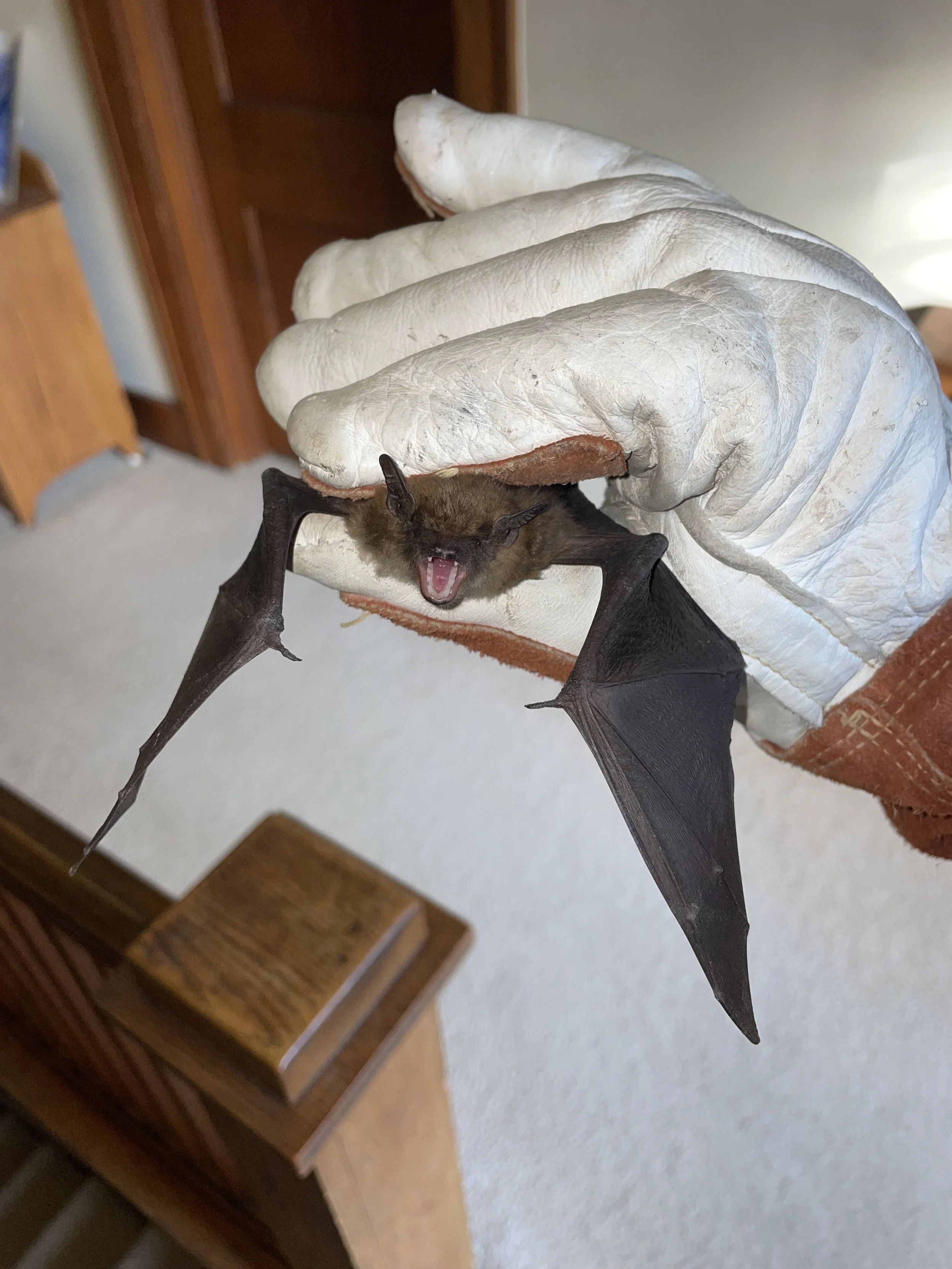
Avoid Direct Contact: Never touch a bat with bare hands. Use thick leather gloves if handling is necessary.
Safely Capture the Bat (if possible): If the bat is alive and there's a potential exposure, capture it for testing:
Place the bat in a sturdy container.
Do not kill the bat. Live specimens are preferred for rabies testing.
Store the bat for testing. Whether the bat is dead or alive it needs to be preserved:
Place it in a sturdy, sealable container (e.g., a food storage container or jar).
Store it in the refrigerator (not the freezer) to keep it cool and preserve the brain tissue for accurate rabies testing. Refrigeration rather than freezing prevents decomposition without damaging the sample.
Seek Medical Attention: If exposure is suspected, wash the area with soap and water immediately and contact a healthcare provider for advice on rabies post-exposure prophylaxis (PEP), which may include vaccinations.
Contact the Washtenaw County Health Department
All bat exposures, animal bites, or suspicions of rabies should be reported to the Washtenaw County Health Department for guidance on testing and next steps. They coordinate rabies testing and can advise on whether the bat needs to be submitted to a lab.
Reporting Options:
Use the secure online form at www.washtenaw.org (search for "Fight the Bite" or "Rabies").
Call the main Health Department line: 734-544-6700
Do not release the bat until you've received guidance. Testing may be required to rule out rabies. Immediate reporting helps ensure timely treatment if needed.
Preventing Bat Infestations
Bats often enter homes through small gaps around roofs, cracks, or unscreened vents. Prevention is key to avoiding future encounters and health risks:
Community Pest Solutions specializes in humane bat eviction and exclusion services. We safely remove bats during their active seasons (typically avoiding maternity periods from May to August to protect pups) and seal entry points to prevent re-entry.
Additional Tips
Bats are protected species in Michigan and must not be harmed unnecessarily.
If you hear scratching in walls or see guano (bat droppings) in your attic, call a professional immediately.
Educate family members, especially children, about not handling wildlife.
Stay safe and seek medical attention: If exposure is suspected, wash the area with soap and water immediately and contact a healthcare provider for advice.